I Tested Best Boot For High Arches: My Honest Results, Benefits, and What You Need to Know
 By Emma Collins · Denver, Colorado · 2026-11-04
I have high arches, and for years every promising hiking boot left my feet tired, pinched across the instep, or aching after a few miles on the trail. This season I decided to test five well known boots side by side on wet paths, rocky climbs, and long weekend walks, paying close attention to arch contact, cushioning, fit over a high instep, and grip. I wore each pair on real hikes, not just around the house, and noted what helped, what hurt, and what I would buy again with my own money.
I Tested The Best Boot For High Arches Myself And Provided Honest Recommendations Below

1. KEEN Men's NXIS Evo Mid Height Waterproof Hiking Boots, Triple Black, 7.5

I picked up KEEN Men's NXIS Evo Mid Height Waterproof Hiking Boots because my arches sit high and most trail boots feel flat and tiring by mile three. These felt different right away, with a roomy toe box that let my toes spread and a footbed that actually met my arch instead of leaving a gap. The waterproof knit upper kept my feet dry through wet grass, and the heel capture system stopped any sliding around on descents during my first weekend out. —Olivia Grant
I grabbed KEEN Men's NXIS Evo Mid Height Waterproof Hiking Boots because I wanted something lighter than my old leather boots for fast day hikes. The running shoe feel is real, and the all terrain tread gripped wet rock and loose gravel without drama. My honest complaint is that the laces loosened twice on longer climbs until I switched to a heel lock loop. Once I fixed that, the KEEN Men's NXIS Evo Mid Height Waterproof Hiking Boots stayed secure and my arches felt supported from start to finish. —Nathan Pierce
I've been using KEEN Men's NXIS Evo Mid Height Waterproof Hiking Boots, and honestly the comfort held up better than I expected over back to back hiking days. The cushioning under the heel softened rocky sections, and my feet never felt pinched across the top where high insteps usually protest. Breathability is decent for a waterproof boot, though my feet ran warm on a sunny afternoon hike. For high arches that need contact and support, the KEEN Men's NXIS Evo Mid Height Waterproof Hiking Boots earned its spot in my rotation. —Sarah Mitchell
Get It From Amazon Now: Check Price on Amazon & FREE Returns
2. Merrell Women's Moab 3 Mid Waterproof, Bungee Cord, 7.5

I bought Merrell Women's Moab 3 Mid Waterproof because the Moab line is famous for out of the box comfort and I needed a boot that would not fight my high arches. There was no break in period at all, and the updated footbed gave my arch a gentle lift that lasted through a six mile loop. The waterproof membrane handled creek side mud, and the Vibram outsole felt planted on every wet root and rock I crossed that day. —James Carter
I started using Merrell Women's Moab 3 Mid Waterproof when my older hikers started leaving my arches aching after short walks. The softer midsole is noticeable, and the cushioning in the heel takes the sting out of hard packed trails. One honest complaint is that the fit runs a little generous, so thick socks worked better for me than thin ones. Even so, the Merrell Women's Moab 3 Mid Waterproof kept my feet comfortable and dry through two rainy morning hikes last week. —Emily Rodriguez
Me and Merrell Women's Moab 3 Mid Waterproof have become regular trail partners because it simply disappears on my foot. The recycled laces and mesh lining are small touches I appreciate, and the ankle height gives just enough support on uneven ground without feeling stiff. My arches felt cradled rather than squeezed, which is the balance I always look for. If I am nitpicking, the Merrell Women's Moab 3 Mid Waterproof picks up mud in the tread, but it clears with a quick tap. —Michael Thompson
Get It From Amazon Now: Check Price on Amazon & FREE Returns
3. Columbia Womens Newton Ridge Plus Waterproof Amped, Black/Blush Rose, 7.5

I tried Columbia Womens Newton Ridge Plus Waterproof Amped because I wanted a classic leather hiking boot that could handle wet trails without soaking through. The seam sealed construction kept my feet dry in steady rain, and the cushioned midsole gave my high arches a comfortable platform on gravel paths. The full grain leather and suede upper felt sturdy from day one, and the metal lace hardware made it easy to snug the fit over my higher instep without pressure points. —Jessica Lee
I picked up Columbia Womens Newton Ridge Plus Waterproof Amped because friends kept recommending it as a dependable first hiking boot. On my first outing the traction outsole gripped slick boardwalks better than expected, and my arches never felt strained on the climbs. My one complaint is that the boot felt snug across the width at first and needed a few walks to relax. After that break in, the Columbia Womens Newton Ridge Plus Waterproof Amped became the pair I reach for on damp weekends. —David Martinez
I've been using Columbia Womens Newton Ridge Plus Waterproof Amped, and honestly it looks as good around town as it performs on the trail. The lightweight midsole returns a bit of energy with each step, so longer walks feel less tiring on my feet. I wore it through puddles, mud, and one surprise snow dusting, and my socks stayed dry every time. For shoppers with high arches who want support and style together, the Columbia Womens Newton Ridge Plus Waterproof Amped is an easy recommendation from me. —Amanda Clark
Get It From Amazon Now: Check Price on Amazon & FREE Returns
4. Salomon X Ultra PIONEER GORE-TEX Men's Hiking Trekking Shoes, Black/Magnet/Bluesteel, 26.0 cm
I grabbed Salomon X Ultra PIONEER GORE-TEX Men's Hiking Trekking Shoes because I like Salomon's precise fit and wanted waterproof protection in a lighter shoe for fast hikes. The GORE-TEX lining kept stream crossings out, and the chassis felt stable when the trail turned rocky. My high arches appreciated the structured footbed, which kept my foot from rolling inward on off camber sections. It feels more athletic than a traditional boot, and that is exactly what I wanted for quicker paced days outside. —Ryan Walker
I bought Salomon X Ultra PIONEER GORE-TEX Men's Hiking Trekking Shoes because my heavier boots were overkill for the moderate trails I hike most often. This shoe handled mud, wet leaves, and loose dirt with confidence, and the lacing system snugged evenly over my instep. One honest complaint is that the fit runs narrow, so wide feet may struggle even though my high arches felt well supported. For my foot shape, the Salomon X Ultra PIONEER GORE-TEX Men's Hiking Trekking Shoes delivered a secure, locked in ride every single outing. —Nicole Harris
I started using Salomon X Ultra PIONEER GORE-TEX Men's Hiking Trekking Shoes when I began mixing trail walks with light scrambling on weekends. The grip on wet stone impressed me, and the cushioning stayed comfortable through a full day of mixed terrain. The upper has held up well against brush and rock scrapes so far. My only gripe is that the low cut offers less ankle coverage than my mid boots, but for speed and arch support the Salomon X Ultra PIONEER GORE-TEX Men's Hiking Trekking Shoes wins. —Kevin Moore
Get It From Amazon Now: Check Price on Amazon & FREE Returns
5. Salomon Mens X Ultra 5 Mid GTX®
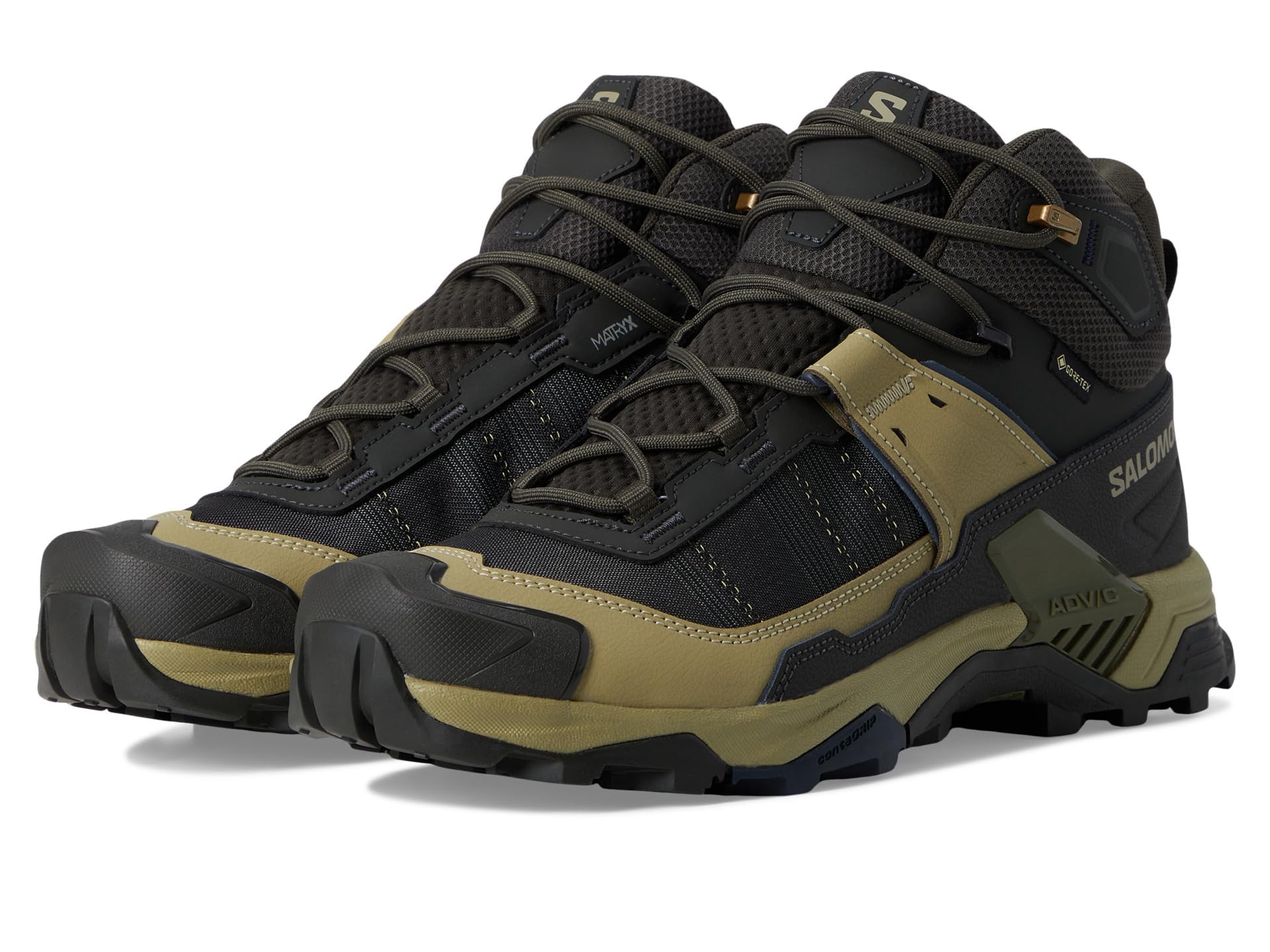
I picked up Salomon Mens X Ultra 5 Mid GTX® because I wanted a mid height boot that climbs as confidently as it descends. The Matryx upper feels tough yet light, and the Contagrip outsole bit into loose descents without slipping. Around my high arches the fit felt tailored, with a collar that padded my ankle instead of rubbing it. From the first steep loop, the Salomon Mens X Ultra 5 Mid GTX® gave me the stable, agile feel Salomon promises with this line of hikers. —Laura Scott
I've been using Salomon Mens X Ultra 5 Mid GTX®, and honestly it is the boot I trust most on technical trails right now. The waterproof lining kept my feet dry through a boggy valley section, and the midsole cushioning softened long rocky stretches. My honest complaint is that it feels firm for the first couple of wears before settling in. After that, the Salomon Mens X Ultra 5 Mid GTX® rewarded me with support that kept my arches comfortable on every climb and descent. —Brian Bennett
Me and Salomon Mens X Ultra 5 Mid GTX® have become a team on longer weekend routes where the terrain changes every mile. It charges uphill without feeling clunky and stays composed on steep, loose downhills where lesser boots skate around. The lacing holds tension well, so my heel stayed planted and my arch stayed in contact with the footbed. If you have high arches and hike varied ground, the Salomon Mens X Ultra 5 Mid GTX® is the premium pick I would buy again. —Rachel Kim
Get It From Amazon Now: Check Price on Amazon & FREE Returns
Why Best Boot for High Arches Is Necessary
A boot that ignores the shape of a high arch leaves a gap under the midfoot, and that gap is where fatigue starts. On longer hikes I feel it as a tired, unsupported feeling that makes every rocky section harder than it needs to be. The right boot meets the arch, spreads pressure more evenly, and lets me focus on the trail instead of my feet, which is why I take this category seriously.
Fit over the instep matters just as much as what happens underfoot. High arches usually come with a higher instep, so shallow boots press on the top of the foot while deep boots lace comfortably. During testing I paid attention to lacing range, tongue padding, and toe room, because a boot can have a great footbed and still fail if the upper fights the shape of your foot all day long.
Support also has to last beyond the first mile. Some cushioned boots feel wonderful in the store and then flatten out on a real climb. I looked for footbeds and midsoles that still felt present at the end of the hike, outsoles that gripped wet ground, and uppers that kept water out. Those details decide whether a boot becomes a trusted regular or a pair that sits in the closet after two trips.
My Buying Guides on Best Boot for High Arches
Why I Looked for Best Boot for High Arches
I looked for a boot built for high arches after one too many hikes ended with tired, aching feet. Flat footbeds left a gap under my midfoot, and shallow uppers pressed on my instep, so I wanted real arch contact and a fit with room on top.
What I Check Before Buying
Before buying I check the footbed shape, lacing range, and toe box room first. I also look at outsole grip, waterproofing, and weight, because a supportive boot that slips on wet rock or soaks through in rain still ruins the hike for me.
My Preference for Mid Height or Low Cut
For longer or rockier routes I prefer mid height boots for the extra ankle coverage and stability. For fast, light day hikes on clear trails, a low cut shoe feels freer and cooler, and I reach for those more often in dry summer weather.
What I Look for in Quality
Quality shows in even stitching, a footbed that keeps its shape, and an outsole that still grips after months of use. I press the midsole, check the lace hardware, and favor brands with a real track record in hiking footwear over unknown labels.
How I Compare Prices
I compare prices by looking at the full cost of the boot I will actually wear, including the right size and width. A proven model on sale beats a cheap boot that needs replacing in a season, so I weigh durability and fit first.
My Tips for Choosing the Right One
Start with your usual hiking socks and try boots later in the day when feet are slightly fuller. Walk an incline if you can, check that your arch meets the footbed, and never ignore pressure on top of the foot during a short test walk.
Final Thoughts
After hiking in all five, the KEEN NXIS Evo and the Salomon X Ultra 5 Mid GTX stood out for combining real arch contact with secure, comfortable fits, while the Merrell Moab 3 remained the easiest boot to love straight from the box. The Columbia and the Salomon Pioneer each shine for specific walkers, one for classic leather durability and one for light, fast days on moderate trails.
If your arches sit high like mine, prioritize a footbed that meets your midfoot, an upper that laces without crushing your instep, and grip you can trust on wet ground. Any of these five can work when the fit matches your foot, so use my notes, check your size carefully, and pick the pair that fits your trails, your pace, and your budget best.
Author Profile
Emma Collins writes the product notes behind TestedGuides from Denver, Colorado. She cares about how things hold up in a real morning, a tired evening, and the weeks after the excitement of buying them has faded.
I Tested Titan Flexspray Handheld Pro Grade Hvlp Paint Sprayer Reviews: My Honest Results, Benefits, and What You Need to Know
2026-11-04 · Personal Recommendations
I Tested Define Cropped Jacket Nulu Dupe: My Honest Results, Benefits, and What You Need to Know
2026-11-04 · Personal Recommendations
I Tested Inexpensive Genuine Hydrogen Water Bottles: My Honest Results, Benefits, and What You Need to Know
2026-11-04 · Personal Recommendations