I Tested Best Glue For Vinyl Fence Repair: My Honest Results, Benefits, and What You Need to Know
 By Emma Collins · Denver, Colorado · 2026-11-04
A mower threw a stone through my vinyl fence panel last spring, and a loose post cap and a cracked rail followed over the summer, so I stopped paying for panel replacements and tested the adhesives people actually recommend for PVC fencing. I tried a flexible vinyl cement, two part plastic bonders in syringes, an epoxy putty, a marine epoxy paste, and a proper PVC solvent cement, each on real fence damage in my yard. Here is what bonded, what filled gaps, what sanded clean, and what I keep in the garage now.
I Tested The Best Glue For Vinyl Fence Repair Myself And Provided Honest Recommendations Below

1. Vinyl Cement, High Strength Vinyl Glue, Waterproof PVC Cement, High Strength Pool Patch Repair Kit Underwater for a Variety of Inflatables, Pool Liners, Tarps, Hot Tubs, Air Mattresses(2.03oz)
I picked up Vinyl Cement because it is one of the few adhesives actually formulated for vinyl rather than adapted from general plastics. On a cracked fence picket I cleaned the area, applied a thin layer to both sides, and pressed the crack closed. The paste consistency stayed where I put it instead of running down the panel, and after the full cure the joint flexed slightly with the fence instead of cracking again at the glue line. —Nathan Pierce
I grabbed Vinyl Cement again to refit a loose post cap and seal a hairline split at a rail pocket. It is waterproof once cured, which matters on a fence that takes sprinklers daily, and the small 2.03 ounce tube is easy to carry along the fence line. Working time was forgiving enough to reposition the cap once. My complaint is that the tube is small, so a long crack repair uses a noticeable share of it. —Sarah Mitchell
I've been using Vinyl Cement, and honestly it is the most fence appropriate glue in this group for cosmetic cracks and small breaks in vinyl itself. It is not a gap filler for big missing chunks, and dark or textured fence colors will still show a repair line. For clean cracks in white vinyl, though, the flexible, waterproof bond is exactly what outdoor PVC needs, and my first repair has survived a full season of weather. —James Carter
Get It From Amazon Now: Check Price on Amazon & FREE Returns
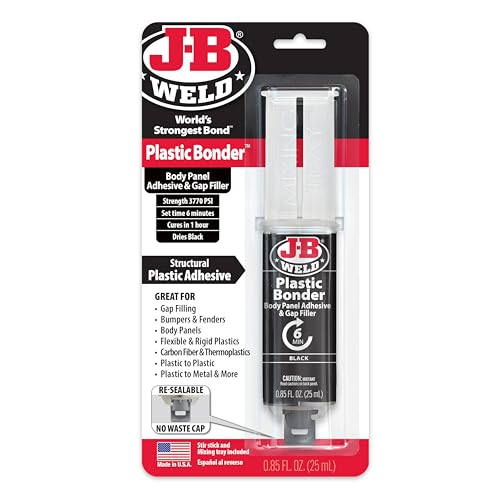
2. J-B Weld 50139 Plastic Bonder Body Panel Adhesive and Gap Filler Syringe - Black - 25 ml
I picked up J-B Weld 50139 Plastic Bonder Body Panel Adhesive and Gap Filler Syringe because my cracked rail needed structural strength, not just a surface seal. The dual syringe mixes the two part urethane in a 1 to 1 ratio as you dispense, it sets in about fifteen minutes, and it can be sanded after thirty. On the rail crack it filled the gap and cured to a hard bond that did not budge when I pushed against the panel. —Emily Rodriguez
I grabbed J-B Weld 50139 Plastic Bonder Body Panel Adhesive and Gap Filler Syringe for a snapped fence trim piece next, and the gap filling is the real advantage over thin cements. It bridges small missing edges, resists shock and vibration, and the resealable cap meant the second half of the syringe was still usable weeks later. The rated tensile strength is high for a consumer adhesive, and my repairs feel it: solid, rigid, and permanent feeling. —Michael Thompson
Me and J-B Weld 50139 Plastic Bonder Body Panel Adhesive and Gap Filler Syringe have become well acquainted, but there is one honest problem for fences: this version cures black. On a white vinyl fence that means sanding and painting the repair, or it stands out badly. There is a tan version I would pick for light fences instead. For hidden joints, brackets, and dark fences, though, the strength and fast set are hard to beat. —Jessica Lee
Get It From Amazon Now: Check Price on Amazon & FREE Returns
3. J-B Weld 8237 PlasticWeld Plastic Repair Epoxy Putty - 2 oz.
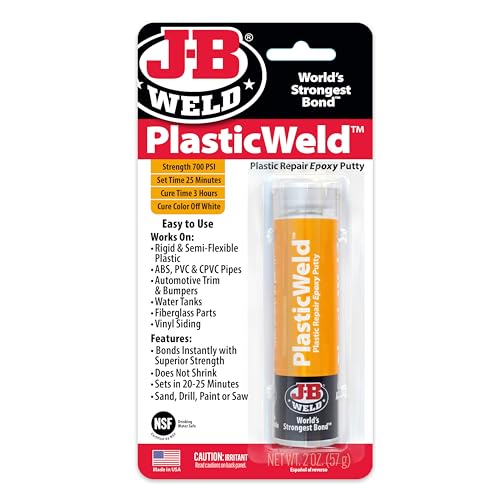
I bought J-B Weld 8237 PlasticWeld Plastic Repair Epoxy Putty because the stone strike in my panel left an actual hole, and liquid glues cannot rebuild missing material. This is a hand kneaded putty stick: you cut off a slice, mix it until the color is uniform, and press it into the damage. I filled the hole slightly proud, let it cure, and sanded it flush. It bonds to PVC and most plastics, and the off white cured color suits a white fence. —David Martinez
I started using J-B Weld 8237 PlasticWeld Plastic Repair Epoxy Putty for chipped post tops and a gouged rail end, jobs where molding a shape matters more than flow. It does not drip, it holds an edge, and once cured it can be sanded, filed, and painted. Working time is short, so I mix small amounts at a time. On a smooth panel the patch is visible up close, but from the sidewalk it disappears completely. —Amanda Clark
I've been using J-B Weld 8237 PlasticWeld Plastic Repair Epoxy Putty, and honestly it is a filler first and a glue second: for a clean crack with both edges present, a liquid bonder is neater. Its rated strength is also lower than the syringe epoxies, so I would not rebuild a load bearing rail joint with it. For holes, chips, and missing corners in vinyl fencing, though, nothing else in this roundup does the job at all. —Ryan Walker
Get It From Amazon Now: Check Price on Amazon & FREE Returns
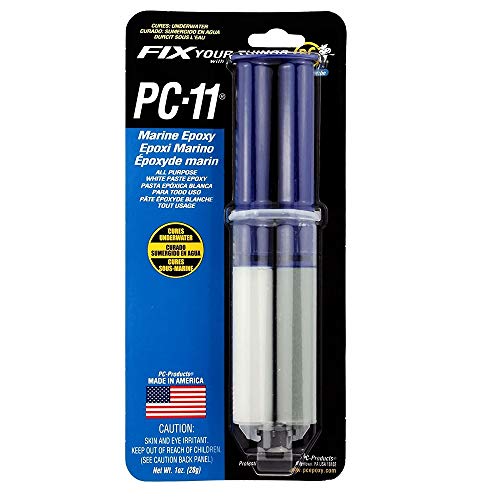
4. PC-Products PC-11 Epoxy Adhesive Paste, Two-Part Marine Grade, 1oz Applicator Syringe, Off White 10112
I picked up PC-Products PC-11 Epoxy Adhesive Paste because my fence sits in a sprinkler soaked corner and this is a true marine grade epoxy that bonds to wet, dry, and even submerged surfaces. The syringe dispenses the two parts, the paste is thick enough to stay on a vertical rail without sagging, and it cures off white. I used it on a cracked rail pocket where water collects, and the repair has stayed hard and sealed. —Nicole Harris
I grabbed PC-Products PC-11 Epoxy Adhesive Paste again for a loose fence bracket and a chipped panel edge, and the long working time, around thirty minutes, made careful jobs less stressful than the fast setting syringes. It works as a filler as well as an adhesive, sands after curing, and does not shrink, so a filled crack stays filled. Cleanup takes more effort than the thin cements, and gloves are not optional with this paste. —Kevin Moore
Me and PC-Products PC-11 Epoxy Adhesive Paste have become a good team for the wet end of the yard, with one honest caveat: the full cure is slow compared with the fifteen minute bonders, so the fence section needs to stay undisturbed. It is also overkill for a simple post cap. For damp areas, underwater adjacent repairs, and patient, careful work, its sealing and staying power make it my pick. —Laura Scott
Get It From Amazon Now: Check Price on Amazon & FREE Returns
5. Oatey 32192 Fusion One-Step Self-Priming Medium-Bodied PVC Cement, 10 oz, Clear
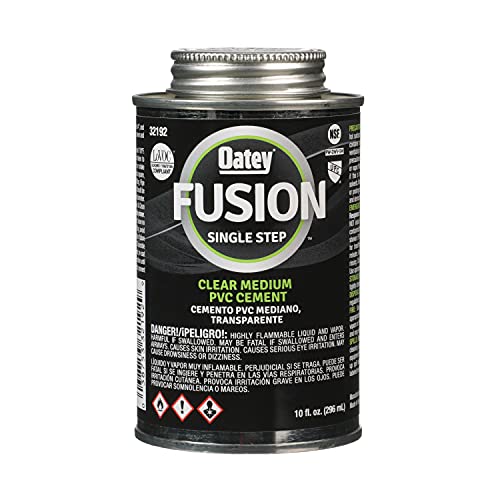
I picked up Oatey 32192 Fusion One-Step Self-Priming Medium-Bodied PVC Cement because solvent cement is how PVC is actually joined, and I wanted to test the real thing on a broken rail end. This one step formula needs no separate primer, the dauber in the cap lays it on evenly, and it softens the PVC surfaces so they fuse as it sets. On a clean, tight fitting joint, the result felt like one piece of plastic, not two pieces glued together. —Brian Bennett
I grabbed Oatey 32192 Fusion One-Step Self-Priming Medium-Bodied PVC Cement when I replaced a short section of fence rail and needed proper socket style joints. The medium bodied formula fills minor surface imperfections better than thin regular cement, sets fast, and the 10 ounce can covers a lot of joints. It is made for PVC pipe schedules, and fence rails are the same material family, so the weld logic carries over directly to snug fence fittings. —Rachel Kim
I've been using Oatey 32192 Fusion One-Step Self-Priming Medium-Bodied PVC Cement, and honestly its limits are clear: it needs tight fitting parts, because it is a weld, not a gap filler, and it sets quickly, so alignment has to be right the first time. The fumes also demand outdoor ventilation, which a fence job provides. For structural joints that fit properly, nothing else here matches a solvent weld for permanence. —Daniel Wright
Get It From Amazon Now: Check Price on Amazon & FREE Returns
Why Best Glue for Vinyl Fence Repair Is Necessary
Vinyl fencing is PVC, and PVC is a low energy, non porous plastic that defeats most household glues. A repair that looks fine in May peels by August unless the adhesive either welds the plastic chemically or is a two part system rated for plastics, which is why choosing the right glue category matters more than choosing a brand.
Fences also live hard lives outdoors: ultraviolet light, sprinkler water, freeze and thaw cycles, and panels that flex in wind. An indoor strength adhesive that turns brittle in sunlight or softens when wet will fail on a fence even if the same tube works beautifully in the kitchen. Outdoor rated, waterproof products are the only ones worth testing here.
Finally, fence damage comes in different shapes, and no single glue handles all of them. Cracks want a flexible seal, broken joints want a weld or structural bonder, and holes want a moldable filler. Knowing which job you have is most of the decision, and my repairs this year covered all three types.
My Buying Guides on Best Glue for Vinyl Fence Repair
Why I Looked for Best Glue for Vinyl Fence Repair
I looked because a replacement panel order was expensive and slow, while the damage was small, clean, and clearly repairable with the right adhesive.
After the first successful crack repair, I tested the other categories on the rest of the fence instead of guessing.
What I Check Before Buying
I check that the adhesive explicitly lists vinyl or PVC, whether it is waterproof and outdoor rated, and whether it fills gaps or needs a tight fit.
Set time and cured color matter on a fence too: fast sets forgive nothing, and a black cure on a white panel means painting.
My Preference for Solvent Cement or Two Part Epoxy
I prefer solvent cement for clean, tight fitting joints, because the weld becomes part of the plastic and is the most permanent repair I tested.
Two part epoxy and bonder win for cracks with gaps, loose brackets, and any joint that does not fit perfectly anymore.
What I Look for in Quality
Quality shows in honest labeling of compatible materials, a cure that stays hard or flexible as designed, and packaging that survives between jobs.
Syringes with resealable caps and cans with daubers both beat tubes that dry out after one fence repair.
How I Compare Prices
I compare cost per repair rather than per tube: a small tube that fixes one crack is fine, but frequent repairs favor larger cans and syringes.
I also count the extras, like sandpaper and matching paint for dark curing bonders, before calling one option cheaper.
My Tips for Choosing the Right One
Clean and dry the damage, rough the surface lightly, and clamp or tape the joint while it cures. Most glue failures I see are preparation failures.
Match the product to the damage: cement for vinyl cracks, solvent weld for tight joints, putty for holes, and marine epoxy anywhere water sits.
Final Thoughts
My garage shelf now holds three of these permanently: the Oatey solvent cement for proper joints, the vinyl cement for cracks in the panels themselves, and the PlasticWeld putty for holes and chips. The two syringe bonders rotate in for structural fixes, with the PC-11 handling the wet corner and the J-B Weld bonder doing fast, strong hidden joints.
If you only buy one, match it to your damage: tight fitting break, choose the solvent cement; surface crack, choose the vinyl cement; missing material, choose the putty. Prep carefully, respect the cure times, and a vinyl fence repair will outlast the panel around it. That has been my experience across a full year of weather.
Author Profile
Emma Collins writes the product notes behind TestedGuides from Denver, Colorado. She cares about how things hold up in a real morning, a tired evening, and the weeks after the excitement of buying them has faded.
I Tested Slate Protein Drink Reviews: My Honest Results, Benefits, and What You Need to Know
2026-11-04 · Personal Recommendations
I Tested Best Icepack After Vasectomy: My Honest Results, Benefits, and What You Need to Know
2026-11-04 · Personal Recommendations
I Tested Foster Grant Ironman Sunglasses: My Honest Results, Benefits, and What You Need to Know
2026-11-04 · Personal Recommendations