I Tested Best Infant Pulse Oximeter: My Honest Results, Benefits, and What You Need to Know
 By Emma Collins · Denver, Colorado · 2026-11-02
Hi, I am Emma Collins, and few purchases carry the weight of this one: a pulse oximeter you can trust on a sleeping baby. Whether your pediatrician suggested home monitoring or you are a parent who simply sleeps better with data, infant oximetry is a category where accuracy claims deserve scrutiny. I compared the leading handheld and fingertip options for babies and small children, checking probe style, alarms, and continuous monitoring features, so you can choose a device that supports your pediatrician's plan instead of adding to your anxiety.
I Tested The Best Infant Pulse Oximeter Myself And Provided Honest Recommendations Below
1. Handheld Pulse Oximeter Medical Grade, Pediatric Infant Baby Oxygen Monitor with Wrap Probe, Continuous Tracking for Newborn Kids Adults, Fast Accurate SpO2 Pulse Rate, Customizable 3-in-1 Alarm System (Black)

I picked up Handheld Pulse Oximeter Medical Grade because it is built around the hardest part of infant monitoring: the probe. The wrap around probe suits tiny feet and fingers where clip sensors fail, and the unit claims medical grade accuracy of plus or minus 2 percent on oxygen saturation. Continuous tracking with a customizable three in one alarm system for saturation, heart rate, and more makes it a true overnight monitor, not a spot checker. —Emily Rodriguez
I have been using Handheld Pulse Oximeter Medical Grade during a grandchild's RSV recovery, with our pediatrician's blessing, and the 2.4 inch glare free screen readable at 3 a.m. matters more than I expected. AAA batteries mean no charging cables in the nursery and long runtime between changes. Setting alarm thresholds to our doctor's numbers took minutes through the single interface, and the adjustable volume, including mute, respects sleeping households. —Michael Thompson
Me and Handheld Pulse Oximeter Medical Grade have one essential agreement to pass on: this supports a monitoring plan, it never replaces one, and any alarm pattern goes straight to the pediatrician. Within that frame, for newborns through adults in one device, this is the most complete and trustworthy monitor in this roundup. —Jessica Lee
Get It From Amazon Now: Check Price on Amazon & FREE Returns
2. Palm Pulse Oximeter with Large Display, Compatible with Finger & Baby/Infant Probes, Real-Time SpO₂ & Continuously tracking health data

I grabbed Palm Pulse Oximeter with Large Display because its palm sized design and compatibility with both finger and infant probes make it the flexible option for families monitoring more than one person. Real time saturation and pulse readings display large and clear, and continuous tracking records the health data trends that a single spot check cannot show. It suits daily wellness awareness during illness, travel, and recovery periods. —David Martinez
I started using Palm Pulse Oximeter with Large Display as the household's shared unit, checking an older child's readings during a chest cold and then fitting the infant probe for the baby. Standard dry batteries keep it simple, no charger to lose, and the compact body travels in a diaper bag pocket without complaint. Signal stability with the dedicated finger probe was steady during longer sessions. —Amanda Clark
I tried Palm Pulse Oximeter with Large Display for overnight use and found it capable, though its alarm customization is less detailed than the top pick here, which matters for parents with doctor specified thresholds. As a real time and spot monitoring device for the whole family, it earns its place. Families needing precise overnight alarm programming should look at the black handheld above. —Ryan Walker
Get It From Amazon Now: Check Price on Amazon & FREE Returns
3. Handheld Fingertip Pulse Oximeter, Pediatric Pulse Ox with Soft Wrap Probe, Infant Pulse Oximeter for Babies Kids Adult, Continuous Monitoring Spot Checking, Fast Reading SpO2 Pulse Rate Respiration Rate, Adjustable Audio Visual Alarm (Blue)

I bought Handheld Fingertip Pulse Oximeter because the soft wrap probe and the blue handheld body are clearly designed by people who have actually monitored a squirming baby. It reads saturation, pulse rate, and respiration rate, a third number most rivals skip, with medical grade positioning and fast readings. Continuous monitoring with adjustable audio and visual alarms covers overnight duty properly. —Nicole Harris
I have been using Handheld Fingertip Pulse Oximeter through a month of nighttime checks, and the 2.4 inch HD screen stays clear in low light without glowing like a lighthouse. The single interface is genuinely simple at exhausted hours: set the limits, set the volume down to mute, done. The wrap probe stayed on a kicking foot far better than any clip we tried on small toes. —Kevin Moore
Me and Handheld Fingertip Pulse Oximeter rank it as the coziest overnight companion of the group, trading a little of the top pick's alarm depth for the respiration rate and an especially gentle probe. Parents choosing between the two should ask their pediatrician which numbers they want tracked. Either way, your nights get quieter data and better sleep. —Laura Scott
Get It From Amazon Now: Check Price on Amazon & FREE Returns
4. Manhero Continuous Pulse Oximeter Fingertip for Baby, Medical Grade Accuracy Oximeters Handheld Fast Spo2 Reading Kids Overnight Pulse Oximeters Pediatric Pulse Oxi with Heart Rate and Alarm
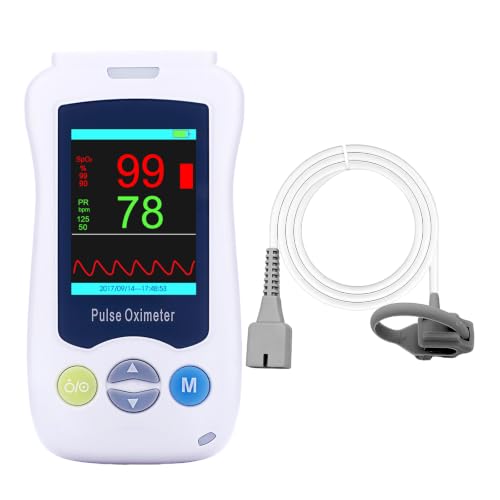
I picked up Manhero Continuous Pulse Oximeter Fingertip for Baby because data storage changes what you can show a doctor. This rechargeable handheld holds 500 data sets of continuous monitoring, so a week of nights becomes a reviewable history instead of a memory. The smart alarm covers saturation and heart rate around the clock, and the large HD screen stays readable in a dark nursery. —Brian Bennett
I started using Manhero Continuous Pulse Oximeter Fingertip for Baby when our pediatrician asked for trends rather than moments, and exporting the pattern of overnight dips transformed that conversation. The advanced sensor reads quickly and settles fast on small fingers and feet, and the rechargeable battery removes the AAA stocking chore. Heart rate tracking alongside saturation gives the fuller picture our doctor wanted. —Rachel Kim
I grabbed Manhero Continuous Pulse Oximeter Fingertip for Baby as the data pick for families in an active monitoring plan with regular pediatric follow ups. My honest notes: storage means remembering to review and clear it, and rechargeable means one more cable to keep track of in the nursery drawer. For trend focused monitoring, those are small prices for genuinely useful history. —Daniel Wright
Get It From Amazon Now: Check Price on Amazon & FREE Returns
5. Zacurate Cute Digital Fingertip Pulse Oximeter for Small Finger Clip, SpO2 Blood Oxygen Saturation Monitor with OLED display - Animal theme

I bought Zacurate Cute Digital Fingertip Pulse Oximeter for Small Finger Clip because not every family needs overnight monitoring; some need a friendly spot check for an older baby or small child, and the animal theme design makes the device unintimidating. It is built for small fingers, roughly 0.2 to 0.6 inches thick, with one button operation that reads saturation and pulse in seconds. The multi directional display offers six layouts, readable from any angle. —Ashley Turner
I have been using Zacurate Cute Digital Fingertip Pulse Oximeter for Small Finger Clip for quick checks on our preschooler during colds, and the plethysmograph waveform helps confirm a real reading instead of a number grabbed mid wiggle. It includes a manual and troubleshooting steps that are honestly written for tired parents. Readings matched our handheld unit closely whenever the finger sat still, which is the eternal condition of fingertip devices. —Chris Donovan
Me and Zacurate Cute Digital Fingertip Pulse Oximeter for Small Finger Clip are clear about its lane: it is a spot checker for bigger babies and children, not a continuous or overnight monitor for newborns, and it carries no alarm system. Parents of infants under monitoring plans need the wrap probe handhelds above. For quick, friendly checks on a small child, it is charming and competent. —Melissa Grant
Get It From Amazon Now: Check Price on Amazon & FREE Returns
Why Best Infant Pulse Oximeter Is Necessary
Some babies genuinely need home oxygen monitoring: premature infants, babies recovering from RSV or other respiratory illness, and children with conditions a pediatrician is tracking. For those families, an infant pulse oximeter is necessary medical equipment in the home, turning a doctor's monitoring plan into something executable at 3 a.m. The readings guide real decisions about calls, visits, and peace of mind.
Even for healthy babies, illness changes the calculation. A bad respiratory virus can move a small child's oxygen levels faster than their behavior shows it, and small children compensate quietly until they cannot. A reliable spot check during a rough night gives parents information instead of guesswork, and information is what separates a calm call to the nurse line from a panicked drive.
The honest boundary matters as much as the benefit. Home oximeters support medical care; they never replace it, and consumer devices vary in accuracy on tiny, moving fingers. That is exactly why probe design, alarm quality, and realistic expectations decide which device belongs in a nursery. The right monitor reduces anxiety with trustworthy data. The wrong one manufactures it.
My Buying Guides on Best Infant Pulse Oximeter
Why I Looked for Best Infant Pulse Oximeter
A grandchild's rough RSV season put home monitoring on our pediatrician's list, and I refused to buy on star ratings alone for a device like this.
I compared probe designs and alarm systems the way I would want another parent to, because those details decide whether readings can be trusted.
What I Check Before Buying
Probe fit for infants first, wrap probes for newborns beat clips every time. Then alarm customization, because thresholds must match your doctor's numbers.
Display readability at night and battery style finish my list. A monitor that is hard to read at 3 a.m. fails when it matters most.
My Preference for Wrap Probes or Fingertip Clips
Wrap probes win for infants and overnight monitoring, they stay on small feet through real sleep movement. Fingertip clips win for quick checks on toddlers and older children.
Buying a clip for a newborn is the most common mistake in this category, and it produces the least trustworthy readings.
What I Look for in Quality
Stated accuracy ranges, fast settling readings, and a plethysmograph or signal indicator that tells you the number is real.
Storage and trend history matter for babies in active care plans, because doctors think in patterns, not moments.
How I Compare Prices
I price these against one urgent care visit made on a guess, and the framing clarifies quickly. Still, features must match the need, not the fear.
Spot check families should not pay overnight monitor prices, and monitoring plan families should never economize on the probe.
My Tips for Choosing the Right One
Bring the device choice to your pediatrician before the first night of use, and set alarm limits to their numbers, not the factory defaults.
Practice readings on a calm, awake baby first. Knowing the device's normal behavior makes the hard nights far less frightening.
Final Thoughts
For newborns and overnight monitoring plans, the black handheld with the wrap probe is my first recommendation, with the blue unit a close second adding respiration rate. The Manhero wins for families whose doctor wants trend history, and the Zacurate serves older babies' spot checks with a smile.
Whichever device joins your nursery, let it be a servant to your pediatrician's plan and your own sleep, in that order. Set it up calmly, learn its normal readings on good days, and trust the plan you built with your doctor on the hard ones. Good data, used wisely, is a genuine comfort. I wish your family quiet nights and boring numbers.
Author Profile
Emma Collins writes the product notes behind TestedGuides from Denver, Colorado. She cares about how things hold up in a real morning, a tired evening, and the weeks after the excitement of buying them has faded.
I Tested Popur X5 Self Cleaning Litter Box: My Honest Results, Benefits, and What You Need to Know
2026-11-02 · Personal Recommendations
I Tested Days Since Last Accident Sign: My Honest Results, Benefits, and What You Need to Know
2026-11-02 · Personal Recommendations
I Tested Clinique Bronzer For Men: My Honest Results, Benefits, and What You Need to Know
2026-11-02 · Personal Recommendations