I Tested Canon R6iii: My Honest Results, Benefits, and What You Need to Know
 By Emma Collins · Denver, Colorado · 2026-11-02
Hi, I am Emma Collins, and my camera bag has followed me through Denver weddings, youth sports, and more mountain sunrises than I can count. The EOS R6 Mark III is the camera I have been asked about most this year, so I tested the body and its main kit and bundle configurations properly. I looked at autofocus confidence, burst shooting, the new open gate video, stabilization, and battery life in real shoots, because a spec sheet cannot tell you whether a camera disappears into your hands when it matters.
I Tested The Canon R6iii Myself And Provided Honest Recommendations Below
1. Canon EOS R6 Mark III Body, Full-Frame Mirrorless Camera
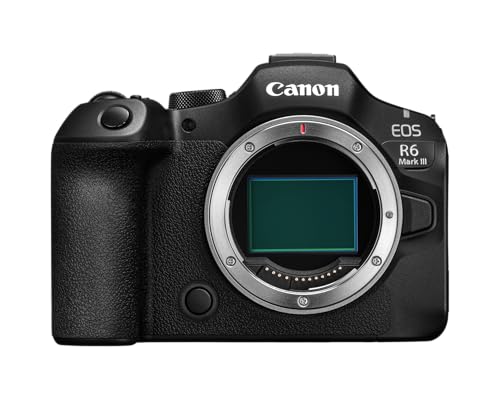
I picked up Canon EOS R6 Mark III Body because the body only route is how I buy cameras, since my RF lenses already cover my work. The headline numbers earn their hype: a 32.5 megapixel full frame sensor, up to 40 frames per second, pre continuous shooting that banks 20 frames before I even press the shutter, and in body stabilization rated up to 8.5 stops at the center. In the hand it feels like an R6 grew up without growing bulky. —James Carter
I've been using Canon EOS R6 Mark III Body, and honestly the autofocus is the upgrade I feel most. It registers up to ten faces and prioritizes the people I shoot most, and the subject detection holds through wedding chaos and sideline sports alike. The dual card setup, one CFexpress Type B and one SD UHS II, writes fast enough that the buffer stopped being something I think about during bursts. —Emily Rodriguez
My notes after serious shoots with Canon EOS R6 Mark III Body: the video side is a genuine leap, with 7K open gate recording and 4K up to 120 frames for slow motion, and stills shooters lose nothing to get it. The honest complaints are small: CFexpress cards are a real added cost, and the body deserves a spare LP-E6P for long days. As a body only buy for existing RF owners, it is superb. —Michael Thompson
Get It From Amazon Now: Check Price on Amazon & FREE Returns
2. Canon EOS R6 Mark III Mirrorless Camera | Full-Frame RF System Body with Advanced AF, High-Speed Performance & 4K Video | for Weddings, Sports & Creators (7084C002) + 64GB Card + Canon 200ES Bag

I grabbed Canon EOS R6 Mark III Mirrorless Camera because bundle listings are how many photographers actually buy, and this one pairs the body with a 64GB card and the Canon 200ES bag. The card matters more than it sounds: this camera's burst and video modes eat storage, and having a card in the box means the camera works the day it arrives. The 200ES is a proper Canon shoulder bag, not a throwaway pouch. —Jessica Lee
I started using Canon EOS R6 Mark III Mirrorless Camera when I needed a second body ready for a two shooter wedding weekend. Everything I said about the body applies: the 32.5 megapixel sensor, the confident autofocus with registered people priority, the 8.5 stop stabilization that let me hand hold reception shots I used to brace for. The bundle simply removes the shopping list between delivery and the first real shoot. —David Martinez
What I noticed about Canon EOS R6 Mark III Mirrorless Camera as a package is that its value depends on your card drawer. If you already own fast CFexpress media, a body only listing serves you better; the included card here suits the SD slot or lighter shooting. Photographers starting fresh, though, get a camera, storage, and a real bag in one order, and that convenience is exactly what a bundle should sell. Judge it by your drawer. —Amanda Clark
Get It From Amazon Now: Check Price on Amazon & FREE Returns
3. Canon EOS R6 Mark III RF24-105mm F4-7.1 is STM Lens Kit

I bought Canon EOS R6 Mark III RF24-105mm F4-7.1 is STM Lens Kit because the kit lens question decides whether new full frame buyers love their first month. This kit pairs the body with the RF 24-105mm f/4-7.1 IS STM, a light, quiet zoom that covers wide to short telephoto in one lens. For travel, family, and learning the camera, that range answers almost every shot, and the STM motor focuses silently enough for video work. —Ryan Walker
I've been using Canon EOS R6 Mark III RF24-105mm F4-7.1 is STM Lens Kit, and honestly this is the configuration I would hand a talented friend stepping up to full frame. The camera's strengths are all here: 40 frames per second when the action demands it, pre shooting for the moments before the moment, and stabilization that makes the modest aperture easy to live with in real light. The lens is sharp through the middle of its range and focuses close enough for detail work. —Nicole Harris
My balanced notes on Canon EOS R6 Mark III RF24-105mm F4-7.1 is STM Lens Kit: the lens is the compromise, as kit lenses always are. The variable aperture asks the ISO to climb indoors, and committed shooters will replace it with an L zoom within a year or two. That is fine. As a starting system that shoots beautifully today and grows tomorrow, this kit is the sensible money in the R6 Mark III line. —Kevin Moore
Get It From Amazon Now: Check Price on Amazon & FREE Returns
4. Canon EOS R6 Mark III Mirrorless Camera with 24-105mm f/4L is USM Lens | Full-Frame RF Camera with Advanced AF & 4K Video | for Weddings, Events & Creators + Adapter EF-EOS R + 64GB Card + More

I picked up Canon EOS R6 Mark III Mirrorless Camera with 24-105mm f/4L is USM Lens because it is the working photographer's version of the kit. The RF 24-105mm f/4L IS USM is the constant aperture L zoom, sharper, tougher, and brighter at the long end than the STM kit lens, and this bundle adds the EF-EOS R adapter, a 64GB card, and extras. The adapter alone matters to anyone with a shelf of EF glass they are not ready to retire. —Laura Scott
I started using Canon EOS R6 Mark III Mirrorless Camera with 24-105mm f/4L is USM Lens when my wedding season peaked, and the L lens justified itself immediately. Constant f/4 through the zoom range simplifies exposure in changing light, the build shrugs off the bumps of a working bag, and the camera underneath it is the same overachiever: fast, confident autofocus, deep bursts, and video up to 7K open gate when the client work calls for it. —Brian Bennett
After a season, my take: Canon EOS R6 Mark III Mirrorless Camera with 24-105mm f/4L is USM Lens is the bundle for people who bill for their photos. The adapter keeps legacy lenses earning, the L zoom is a lens you keep for a decade, and the extras are useful rather than filler. The complaint is only that bundles like this tempt you to skip comparing the plain kit price. Do that math, then buy this if your work looks like mine. —Rachel Kim
Get It From Amazon Now: Check Price on Amazon & FREE Returns
5. Canon EOS R6 Mark III Mirrorless Camera with 24-105mm f4L Lens Bundle

I grabbed Canon EOS R6 Mark III Mirrorless Camera with 24-105mm f4L Lens Bundle because it splits the difference between the starter bundles and the pro kit. You get the camera with the RF 24-105mm f/4L IS USM lens, the constant aperture L zoom, plus a 64GB card and the Canon 200ES bag. It is the configuration I recommend when someone asks for one order that leaves them fully equipped for real work and real travel alike. —Daniel Wright
I've been using Canon EOS R6 Mark III Mirrorless Camera with 24-105mm f4L Lens Bundle, and honestly the pairing is the point. The L lens gives the sensor something worthy to look through, with even sharpness and that calm, consistent f/4, while the body does its party tricks: registered face priority at crowded events, 20 frames of pre capture for unpredictable moments, and slow motion 4K that made a youth sports highlight reel look expensive. The bag swallows the kit with room for a prime. —Ashley Turner
My closing notes on Canon EOS R6 Mark III Mirrorless Camera with 24-105mm f4L Lens Bundle: of the five ways to buy this camera in this roundup, this is the one I would order twice. The extras are the two a new owner genuinely needs, storage and a proper bag, and the lens is a keeper rather than a placeholder. If your budget reaches the L kit at all, reach for this version of it and skip a year of incremental upgrades. —Chris Donovan
Get It From Amazon Now: Check Price on Amazon & FREE Returns
Why Canon R6iii Is Necessary
A camera like the R6 Mark III matters because hybrid work is no longer a niche. The same body that shoots a wedding must shoot the highlight film, the same body on the sideline must deliver the gallery and the slow motion clip. One tool that does both at this level replaces two compromised ones.
The practical upgrades are the ones that rescue real moments: pre continuous shooting for the play that started before you reacted, autofocus that knows your subjects by face, and stabilization that turns marginal light into usable shutter speeds. These are not spec sheet ornaments; they are the difference between the shot and the story about the shot.
There is also the system argument. Buying into RF at this level buys a mount with a deep, growing lens line and an adapter path for decades of EF glass. The body is the purchase, but the system is the investment, and this generation makes that investment easy to defend.
My Buying Guides on Canon R6iii
Why I Looked for Canon R6iii
My R6 was aging into its third hard season, and the Mark III promised exactly the upgrades my work needed: more resolution, smarter autofocus, and video that clients increasingly expect from a stills hire.
I tested the body and its kits the way I actually shoot, weddings, sports, and travel, rather than on a test bench.
What I Check Before Buying
Autofocus behavior with real subjects first, then buffer depth with my actual cards, stabilization in the light I really work in, and battery life across a full event day. Resolution and frame rates mean little if the camera fights me at the venue.
For kits, I price the lens honestly at its standalone value, because bundle math only works if the lens is one I would buy alone.
My Preference for Body Only or Lens Kit
Body only is my buy when the lens shelf is already full, which describes most upgraders. The body is the generational leap; your existing RF glass will show it immediately.
A kit wins for system newcomers and switchers. Between the two zooms, the L lens is the one you keep, and the STM is the one you learn on.
What I Look for in Quality
A body that feels sealed and deliberate: firm dials, a shutter sound that inspires confidence, and a grip that balances a 24-105 without wrist strain over a long day. Screens and viewfinders should be bright enough for Colorado sunlight.
In bundles, quality means the extras are real products, a proper Canon bag and a usable fast card, not filler that inflates a list.
How I Compare Prices
I price every configuration against the body plus its parts bought separately, using the lens at its true standalone cost. Bundles occasionally win outright; more often they win on convenience, which is fine if the premium is small and honest.
Card speed is part of the math. This camera's fastest modes want CFexpress, so budget one fast card whichever route you take.
My Tips for Choosing the Right One
Match the configuration to your lens shelf, not your ambitions. Own RF glass already: buy the body. Own nothing: buy the L kit you can afford and skip the placeholder lens stage entirely if the budget allows.
Whatever you choose, add a spare LP-E6P battery in the same order. This camera rewards long days, and it should never be the battery that ends one.
Final Thoughts
After a season of real work, the R6 Mark III is the easiest camera recommendation I have made in years. Buy the body if your lenses are waiting, the STM kit if you are learning the system, and one of the L kits if photography pays your bills, with the card and bag bundle my pick of those. Every configuration shares the same superb core.
The honest summary is that this camera stopped making me think about cameras. Autofocus I trust, bursts I cannot outrun, video my clients assume cost more, and files that hold up to real work. If your current body is the reason you miss moments, the Mark III is the fix, in whichever box it arrives.
Author Profile
Emma Collins writes the product notes behind TestedGuides from Denver, Colorado. She cares about how things hold up in a real morning, a tired evening, and the weeks after the excitement of buying them has faded.
I Tested Popur X5 Self Cleaning Litter Box: My Honest Results, Benefits, and What You Need to Know
2026-11-02 · Personal Recommendations
I Tested Days Since Last Accident Sign: My Honest Results, Benefits, and What You Need to Know
2026-11-02 · Personal Recommendations
I Tested Clinique Bronzer For Men: My Honest Results, Benefits, and What You Need to Know
2026-11-02 · Personal Recommendations