I Tested Fusible Double Sided Interfacing: My Honest Results, Benefits, and What You Need to Know
 By Emma Collins · Denver, Colorado · 2026-11-04
My applique quilts kept shifting under the needle until I stopped pinning and started testing double sided fusible products properly. Over the last few months I have worked through the big names and the budget rolls: an ultra firm two sided stabilizer for bags, paper backed iron on adhesives in two weights, pressure sensitive sheets for applique, and a long budget film roll. I fused them to cotton, denim, and canvas, washed the finished pieces, and noted which bonds stayed flat, which gummed my needle, and which I now buy by default.
I Tested The Fusible Double Sided Interfacing Myself And Provided Honest Recommendations Below
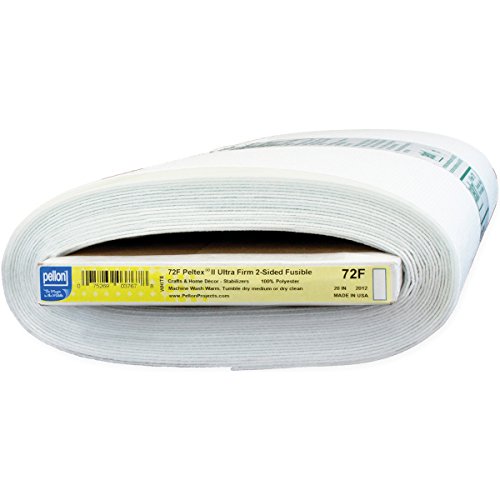
1. Pellon Peltex 2-Sided Fusible Stabilizer, Ultra Firm, 20" x 10 Yards, Perfect for Bags, Boxes, Hats, and Quilting - 100% Polyester
I picked up Pellon Peltex 2-Sided Fusible Stabilizer because my fabric bags kept collapsing, and this is the heavyweight of the group: an ultra firm stabilizer fusible on both sides, twenty inches wide on a ten yard roll. I fused it between outer canvas and lining, and the bag stood up on its own like it had a skeleton. It cuts cleanly with a rotary cutter, does not fray, and the bond survived stitching handles through all the layers. —Daniel Wright
I grabbed Pellon Peltex 2-Sided Fusible Stabilizer again for fabric boxes and a hat brim, and the two sided fusing is what makes it special: fabric bonds to both faces in one pressing session, so there is no loose lining to wrinkle later. You do need a hot iron, firm pressure, and patience, pressing in sections rather than sliding. Once cooled, the shape is set, and my boxes have kept their corners through months of daily use. —Ashley Turner
I've been using Pellon Peltex 2-Sided Fusible Stabilizer, and honestly it is far too stiff for garments or quilts, so do not buy it as a general interfacing. It is also the priciest per yard here, and thick seams through it need a strong machine needle. For bags, boxes, hats, and anything that must hold a shape, though, nothing else in this roundup comes close, and a roll lasts through many projects. —Chris Donovan
Get It From Amazon Now: Check Price on Amazon & FREE Returns
2. Pellon EZ Steam II 12"X9" Sheets 5/PKG-White
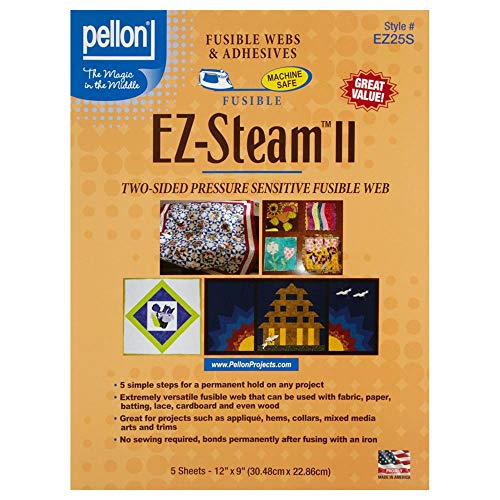
I picked up Pellon EZ Steam II 12"X9" Sheets 5/PKG-White because applique placement is where my projects used to go wrong, and these sheets solve it differently. The fusible is pressure sensitive on both sides with paper backing, so the applique piece sticks in place temporarily and can be repositioned before the iron makes it permanent. I traced my shapes on the paper, cut them, placed them twice before committing, and the final fuse held through machine stitching. —Melissa Grant
I grabbed Pellon EZ Steam II 12"X9" Sheets 5/PKG-White for a set of quilt blocks with small layered pieces, and the sheet format is the convenience here: no measuring off a roll, and the 12 by 9 inch size suits block work and craft applique. The temporary tack kept tiny pieces from skating around the block while I arranged the layout. It also works on lace, ribbon, foam, and batting, which made it the most versatile pack in my craft drawer. —Andrew Foster
Me and Pellon EZ Steam II 12"X9" Sheets 5/PKG-White have become good friends for applique, with two honest limits: five sheets disappear fast on a big quilt, and the cost per area is the highest here. It is a placement tool more than a bulk supply. For detailed applique where repositioning saves the project, though, I reach for these sheets first and save the rolls for hems and large areas. —Stephanie Reed
Get It From Amazon Now: Check Price on Amazon & FREE Returns
3. HeatnBond UltraHold Iron-On Adhesive, 17 Inches x 1 Yard
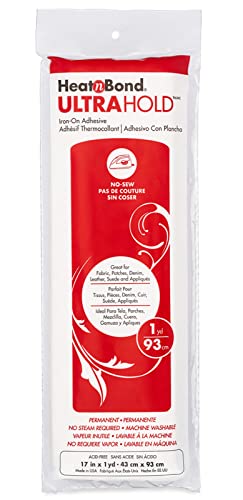
I picked up HeatnBond UltraHold Iron-On Adhesive because some jobs should never see a needle, and this is the no sew, paper backed, double sided adhesive for exactly that. I used the 17 inch by 1 yard piece to bond patches, a fabric wall hanging, and a heavy hem. You draw on the paper backing, iron it to the applique, peel, and fuse the second side. The bond is edge to edge with no puckering, and it feels stronger than stitching on heavy fabrics. —Justin Cole
I grabbed HeatnBond UltraHold Iron-On Adhesive again to repair the hem on denim curtains, and the solid sheet adhesive is the difference from lighter webs: full coverage, no gaps, and a hold that has survived repeated washing on that curtain. It handles thick to thin fabric combinations confidently. The trade off is stiffness, so I keep it off anything that needs drape, and I would not run it under a sewing needle, since it is a no sew product by design. —Hannah Brooks
I've been using HeatnBond UltraHold Iron-On Adhesive, and honestly it is the product I hand to non sewers who want a permanent fabric fix. My cautions are simple: test the iron heat on a scrap, because overheating weakens the bond, and do not expect it to behave like a sewable interfacing on garments. For applique that will not be stitched, heavy hems, and craft bonding, it is the strongest and simplest option here. —Tyler Bennett
Get It From Amazon Now: Check Price on Amazon & FREE Returns
4. HeatnBond Lite Iron-On Adhesive, 17 Inches x 35 Yards
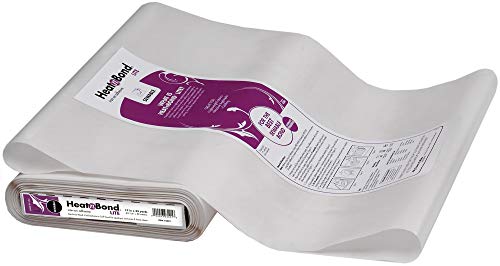
I bought HeatnBond Lite Iron-On Adhesive because it is the sewable sibling of the UltraHold: a paper backed, double sided adhesive made to be stitched through without gumming the needle. This listing is the big 17 inch by 35 yard bolt, which is a serious quantity for a quilt studio. I used it for applique that I then machine stitched, and the pieces stayed put during sewing, added no stiffness, and the finished quilt draped like a quilt should. —Olivia Grant
I started using HeatnBond Lite Iron-On Adhesive for batch applique work, cutting many shapes from one fused length of fabric in an afternoon. Drawing directly on the paper backing makes layout fast, and the light bond means blocks stay flexible enough for hand quilting later. Compared with the UltraHold, the hold is deliberately gentler, so for anything that will not be stitched, I still switch products rather than trusting the Lite to do a no sew job. —Nathan Pierce
Me and HeatnBond Lite Iron-On Adhesive have settled into a production rhythm, but I will be honest about the bolt: thirty five yards is years of supply for a casual crafter, and storage needs a proper roll space. Smaller cuts of the same product exist if your applique habit is occasional. For anyone making quilts regularly, though, the per yard value and the needle friendly bond make this the workhorse fusible in my studio. —Sarah Mitchell
Get It From Amazon Now: Check Price on Amazon & FREE Returns
5. Frienda Iron on Adhesive Film 11.8 x 15 yd Double Sided Heavyweight Press on Patch Heat and Bond Melt Permanent Fusible Webbing for Fabric Applique Fabric Glue Adhesive Roll Quilting Sewing Craft

I picked up Frienda Iron on Adhesive Film 11.8 x 15 yd Double Sided Heavyweight Press on Patch Heat and Bond Melt Permanent Fusible Webbing because the price per yard undercut every name brand, and fifteen yards is a lot of fusible for practice and utility jobs. It is a clear adhesive film rather than a paper backed web, so I cut pieces, laid them between fabric layers, and pressed. On cotton tote bags and patches, the bond set firmly and the finished joins stayed flat after cooling. —James Carter
I grabbed Frienda Iron on Adhesive Film 11.8 x 15 yd Double Sided Heavyweight Press on Patch Heat and Bond Melt Permanent Fusible Webbing again for hemming practice garments and a fabric repair on a cushion cover. Without a paper backing, tracing shapes is less convenient than the HeatnBond rolls, and I had to be careful keeping the film flat, since it wrinkles if handled roughly. Once pressed, though, the hold was genuinely strong, and the white film disappeared between my fabric layers. —Emily Rodriguez
I've been using Frienda Iron on Adhesive Film 11.8 x 15 yd Double Sided Heavyweight Press on Patch Heat and Bond Melt Permanent Fusible Webbing, and honestly it is the budget pick, not the refined one. Instructions are minimal, there is no backing to draw on, and I would test wash durability on a scrap before trusting it to an heirloom quilt. For utility sewing, patches, and learning fusible technique cheaply, the yardage for the money is hard to argue with. —Michael Thompson
Get It From Amazon Now: Check Price on Amazon & FREE Returns
Why Fusible Double Sided Interfacing Is Necessary
Double sided fusible products replace pinning, basting, and hand tacking with a ten second press of an iron, and that speed changes what projects feel possible. Applique that used to take an evening of fiddly placement now takes minutes, and layers stay exactly where you put them under the needle instead of creeping as you sew.
The category is confusing because one name covers very different materials: ultra firm stabilizers that give bags their structure, paper backed adhesives in no sew and sewable weights, pressure sensitive sheets, and plain adhesive films. Buying the wrong type is the most common fusible mistake, and I made most of them before testing these side by side.
Bond quality also decides whether a finished piece survives washing and daily use. A fusible that lets go at the edges or turns a quilt board stiff ruins hours of work, so I washed and flexed every sample in this test rather than judging by the first press alone.
My Buying Guides on Fusible Double Sided Interfacing
Why I Looked for Fusible Double Sided Interfacing
I looked because pinned applique kept shifting under my needle, ruining stitch lines on quilts I had spent weeks piecing.
Once I saw a two sided fusible hold a shape perfectly through sewing, I tested the main types to build a reliable default kit.
What I Check Before Buying
I check whether the product is sewable or no sew, whether it has a paper backing for tracing, and how firm the finished bond will be.
Width and total yardage matter too, since a narrow roll wastes time on wide quilt pieces and a huge bolt needs storage.
My Preference for Paper Backed Rolls or Loose Film
I prefer paper backed rolls for applique, because I can draw the shape on the backing, cut once, and place with confidence.
Loose film earns its place on hems and utility repairs where shapes are simple rectangles and cost per yard decides.
What I Look for in Quality
A quality fusible bonds edge to edge without bubbles, survives washing, and does not gum the needle if it claims to be sewable.
I also look for instructions with real iron settings and press times, since guessing heat is how bonds fail.
How I Compare Prices
I compare cost per yard at the width I actually use, not the headline price, because narrow rolls and sheet packs hide very different rates.
Name brands cost more per yard, so I reserve them for heirloom work and let the budget film carry practice and utility jobs.
My Tips for Choosing the Right One
Match the weight to the project: Lite for stitched applique, UltraHold for no sew bonding, Peltex when the piece must hold a shape.
Always fuse a scrap test first with your fabric, iron, and timing, and let it cool fully before judging the bond.
Final Thoughts
My fusible shelf is now settled: HeatnBond Lite for stitched applique, UltraHold for no sew jobs, Peltex for anything that must stand up, EZ Steam sheets when placement needs repositioning, and the Frienda film for cheap utility yardage. Each earned its spot in real projects, with the limits I noted kept in mind.
If you buy only one, make it the sewable paper backed option in a sensible quantity, since it covers the widest range of quilting and garment work. Add the firm stabilizer when bags and boxes enter your life, and always run the scrap test. Good fusing is mostly matching the product to the job, and now you know the matches.
Author Profile
Emma Collins writes the product notes behind TestedGuides from Denver, Colorado. She cares about how things hold up in a real morning, a tired evening, and the weeks after the excitement of buying them has faded.
I Tested Slate Protein Drink Reviews: My Honest Results, Benefits, and What You Need to Know
2026-11-04 · Personal Recommendations
I Tested Best Icepack After Vasectomy: My Honest Results, Benefits, and What You Need to Know
2026-11-04 · Personal Recommendations
I Tested Foster Grant Ironman Sunglasses: My Honest Results, Benefits, and What You Need to Know
2026-11-04 · Personal Recommendations