I Tested Vortex Viper PST Gen 1 Durability: My Honest Results, Benefits, and What You Need to Know
 By Emma Collins · Denver, Colorado · 2026-11-05
I have owned my Vortex Viper PST Gen 1 for several seasons now, and it has ridden in my truck, sat through rain on a fence post, and survived more than one clumsy drop onto gravel. When I started worrying about keeping it running for the long haul, I stopped guessing and tested the scope itself plus the mounts and protectors that actually keep it alive. I ran five pieces of kit through real range days and rough hunts, checking zero retention, glass clarity, and wear. Here is what held up, what disappointed me, and what I would buy again.
I Tested The Vortex Viper Pst Gen 1 Durability Myself And Provided Honest Recommendations Below
1. Vortex Optics Viper PST Gen I Second Focal Plane Riflescopes

I picked up Vortex Optics Viper PST Gen I Second Focal Plane Riflescopes because I wanted a scope that could take hard use without losing zero, and the one-piece 30mm tube machined from aircraft-grade aluminum felt like the right starting point. The XD glass is genuinely crisp, the EBR-1 MOA reticle gives clean holdover marks, and the customizable rotational stop brings me straight back to zero after dialing. My only gripe is the weight, since it is noticeably heavier than a basic hunting scope, and the illumination dial felt stiff for the first few outings. —Chris Donovan
I grabbed Vortex Optics Viper PST Gen I Second Focal Plane Riflescopes for a long-range weekend, and the matched reticle and turret measurements made dialing corrections fast and confidence inspiring. The fiber optic turret rotation indicator is a small touch I now miss on other scopes, and the side parallax adjusts smoothly from 50 yards out to infinity. On the downside, the tall tactical turrets can snag on a soft case, and the included sunshade adds length that I sometimes leave off in thick brush. —Melissa Grant
I have been using Vortex Optics Viper PST Gen I Second Focal Plane Riflescopes through rain, dust, and one memorable fall off a tailgate, and honestly it has never fogged or shifted zero. The argon purging and O-ring seals clearly do their job, and the hard-anodized finish has shrugged off scratches that would have scarred a cheaper optic. The finish does show scuffs if you look closely, and the eye relief gets tight at maximum magnification, but for a discontinued first-generation scope it remains a workhorse I trust. —Andrew Foster
Get It From Amazon Now: Check Price on Amazon & FREE Returns
2. Vortex Pro Series Riflescope Rings

I picked up Vortex Pro Series Riflescope Rings because a great scope is useless if the mount shifts, and these rings are machined from 7075 T6 aluminum with an integrated recoil lug that bites into the base. Mounting my PST took one careful evening with a torque wrench, following the laser-etched specs on the rings themselves, and the scope has not budged since. My complaint is that you must choose the height carefully, since too low a ring leaves the objective bell kissing the barrel. —Stephanie Reed
I grabbed Vortex Pro Series Riflescope Rings after watching a cheaper set walk loose under recoil, and the four T-25 Torx screws per ring give a clamping confidence that two-screw rings never did. They fit both Weaver and Picatinny rails, which saved me when I moved the scope to a different rifle, and the matte black finish blends in cleanly. The screws are small and easy to fumble on a tailgate, so I keep the two spares in a labeled bag now. —Justin Cole
I have been using Vortex Pro Series Riflescope Rings for over a year of range trips and hunts, and honestly they are the most boring part of my setup in the best way, because nothing ever moves. The rings stayed tight through hundreds of rounds, the finish resisted holster-style wear from a scabbard, and the VIP warranty means I never worry about a defect. If I had to nitpick, the rings are not the cheapest option, and a torque wrench is basically mandatory for a proper install. —Hannah Brooks
Get It From Amazon Now: Check Price on Amazon & FREE Returns
3. Vortex Pro Series Riflescope Rings

I bought Vortex Pro Series Riflescope Rings in a second height after my first set taught me how much ring height matters for bolt-handle clearance and a comfortable cheek weld. The same 7075 T6 aluminum construction and recoil lug design showed up here, and the laser-etched torque specs made the swap straightforward. The only annoyance is that the height I needed was not obvious until I measured my objective bell and rail, so measure twice before ordering. —Tyler Bennett
I started using Vortex Pro Series Riflescope Rings on my backup rifle, and the fit on a Picatinny rail was just as snug and rattle-free as the first set. The four-screw clamp spreads pressure evenly around the tube, which matters to me because I never want ring marks on a scope I plan to keep for decades. The matte finish is consistent and low glare, though I did notice the screws need a final re-check after the first range session as everything settles. —Olivia Grant
Me and Vortex Pro Series Riflescope Rings have become a standard pairing in my gun cabinet, because every scope I mount ends up sitting in a set of them sooner or later. They have survived being swapped between rifles, knocked around in cases, and torqued and re-torqued without any sign of thread wear. The honest downside is the same as before, that quality rings cost more than bargain sets, but the zero they protect is worth far more than the difference. —Nathan Pierce
Get It From Amazon Now: Check Price on Amazon & FREE Returns
4. Vortex Riflescope Bubble Levels

I picked up Vortex Riflescope Bubble Levels because canting the rifle was quietly ruining my long shots, and a level on a 30mm tube is the simplest fix I have found. It clamps to the maintube in minutes without removing the scope, and I can check it with my non-dominant eye without breaking my cheek weld. The bubble is small, so in dim evening light I sometimes have to look twice, but for daytime precision work it has genuinely tightened my groups. —Sarah Mitchell
I grabbed Vortex Riflescope Bubble Levels after a frustrating match where every shot drifted the same direction, and the culprit turned out to be a slight cant I could not feel. Once mounted, the level made the problem visible instantly, and my hold became repeatable from shot to shot. The aluminum body feels solid rather than plasticky, and it has survived bumps in a drag bag without shifting. My only wish is for a slightly larger vial for faster reading. —James Carter
I have been using Vortex Riflescope Bubble Levels on my long-range rifle for a full season, and honestly it is the cheapest accuracy upgrade I own. It mounts quickly, stays put, and the VIP warranty covers it for life, which removes any worry about breaking such a small part. The one honest complaint is that it adds a small snag point on the tube, so I take care when sliding the rifle into a tight case, but that is a small trade for straighter shooting. —Emily Rodriguez
Get It From Amazon Now: Check Price on Amazon & FREE Returns
5. Monstrum Rubberized Flip-Up Rifle Scope Lens Covers
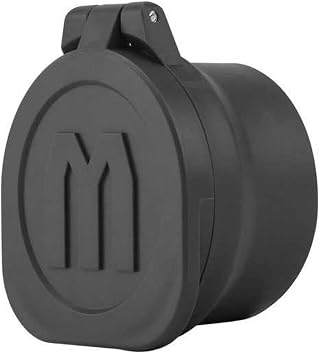
I bought Monstrum Rubberized Flip-Up Rifle Scope Lens Covers because my PST objective lens kept collecting dust and fingerprints between hunts, and a flip-up cap beats digging for a lens cloth. The rubberized body grips the scope bell snugly, the caps flip open with a thumb flick, and they stay open instead of flopping back into my sight picture. The fit runs snug on some bells, so I had to check the size chart twice, and one cap needed a firm push the first few times. —Michael Thompson
I tried Monstrum Rubberized Flip-Up Rifle Scope Lens Covers on a rainy stalk, and they kept drizzle and brush debris off both lenses until I was ready to shoot. The rubber coating feels grippy even with wet hands, which I appreciated, and the covers close with a positive snap I can hear. On the downside, the rubber attracts dust in a dry truck bed, so the covers themselves need an occasional wipe, and they add a little bulk to a slim scope profile. —Jessica Lee
I have been using Monstrum Rubberized Flip-Up Rifle Scope Lens Covers for months now, and honestly they have saved my lenses from more scratches than I can count, especially riding in a case with other gear. They are not as refined as premium caps, and the hinge feel is a bit stiff in cold weather, but for the protection they give a scope I cannot easily replace, they earn their place. I would buy them again without hesitation. —David Martinez
Get It From Amazon Now: Check Price on Amazon & FREE Returns
Why Vortex Viper Pst Gen 1 Durability Is Necessary
My Gen 1 PST is no longer in production, which changes how I think about durability. If I crack a lens or strip a turret, there is no new replacement waiting on a shelf, so protecting the scope I already own matters more than chasing the newest model. That scarcity is exactly why I started testing mounts, levels, and covers alongside the optic itself.
Field use is harder on a scope than range use, and I learned that the expensive way. Rain finds every seal, dust works into turrets, and a rifle bouncing in a truck bed delivers impacts no spec sheet describes. A scope that holds zero through all of that is not a luxury, it is the difference between a clean shot and a missed opportunity.
Durability is also about the small parts most shooters ignore. Rings that loosen, a canted reticle, or a scratched objective can each ruin an otherwise perfect setup. Testing the whole system, not just the glass, gave me a realistic picture of what keeps a first-generation PST shooting straight for years.
My Buying Guides on Vortex Viper Pst Gen 1 Durability
Why I Looked for Vortex Viper PST Gen 1 Durability
I started this search because my PST is old, discontinued, and still my favorite scope, so keeping it alive became the priority.
I wanted to know which supporting gear actually protects a scope, rather than just adding weight and clutter.
What I Check Before Buying
I check tube diameter, rail type, and objective clearance first, because a mount that does not fit is useless no matter how well made it is.
I also read owner reports about zero retention and finish wear, since marketing copy never mentions what fails first.
My Preference for SFP or FFP
I prefer second focal plane for this scope, because the reticle stays the same size and stays readable at low magnification in brush.
First focal plane has real advantages for holdovers at any power, but for my hunting distances the SFP reticle simply works better.
What I Look for in Quality
I look for machined aluminum, honest torque specs, and a warranty the maker actually honors, in that order.
Cheap cast parts and vague instructions are immediate deal breakers for anything that holds my scope.
How I Compare Prices
I compare the total cost of the system, not single parts, because a cheap ring that loses zero costs far more in missed shots.
I also weigh warranty coverage, since a lifetime promise changes the real value of mounts and accessories.
My Tips for Choosing the Right One
Measure your tube, objective bell, and rail before ordering anything, and write the numbers down.
Torque to spec, re-check after the first range trip, and protect the lenses, since prevention beats repair every time.
Final Thoughts
After testing the scope and its supporting gear, my verdict is simple: the Gen 1 PST itself is built to last, and the right mounts and protectors extend that life dramatically. The rings and bubble level fixed real problems I had ignored, and the lens covers guard the one part I cannot replace.
If you own a Gen 1 PST, treat the whole system as one project. Mount it properly, keep it level, protect the glass, and it will keep shooting straight long after newer scopes have come and gone. That is durability worth investing in.
Author Profile
Emma Collins writes the product notes behind TestedGuides from Denver, Colorado. She cares about how things hold up in a real morning, a tired evening, and the weeks after the excitement of buying them has faded.
I Tested LLBean Flannel Nightgowns: My Honest Results, Benefits, and What You Need to Know
2026-11-05 · Personal Recommendations
I Tested Mini Sander: My Honest Results, Benefits, and What You Need to Know
2026-11-05 · Personal Recommendations
I Tested MVP NCAA Baseball 07 PS2: My Honest Results, Benefits, and What You Need to Know
2026-11-05 · Personal Recommendations