I Tested Leatt Chest Protector Reviews: My Honest Results, Benefits, and What You Need to Know
 By Emma Collins · Denver, Colorado · 2026-11-04
I ride off road most weekends, and after one roost hit left a bruise through my old jersey I decided to test Leatt chest protectors properly instead of guessing. Over several weeks I rotated five Leatt protectors from Amazon, from a lightweight roost guard to a full hard shell race model, on motocross tracks and rocky trails. I judged each one on certified protection, fit, ventilation, and how well it worked with a neck brace. Here is what actually held up, what ran hot, and which one I kept reaching for before every ride.
I Tested The Leatt Chest Protector Reviews Myself And Provided Honest Recommendations Below
1. Leatt Chest Protector 5.5 Pro HD

I picked up the Leatt Chest Protector 5.5 Pro HD because it is the heavy duty option in the range, with a hard shell over 3DF AirFit foam and CE Level 2 protection for the chest and back. On the track the multi plate design moved with me instead of fighting me, and the shoulder protection gave me real confidence over jumps. It is bulkier than the soft models, so smaller riders may find it a lot of gear, but for aggressive riding the coverage felt worth it every single lap. —Kevin Moore
I've been using the Leatt Chest Protector 5.5 Pro HD, and honestly the ventilation surprised me most. Leatt claims dozens of vent slots and you can feel air moving through them on slower trail sections, which keeps the foam from turning into a sweat sponge. The BraceOn system lined up cleanly with my Leatt neck brace with no fiddling at the straps. My one complaint is weight: at around two kilograms it is noticeable on long enduro days, and my shoulders felt it by the final hour of riding. —Laura Scott
I grabbed the Leatt Chest Protector 5.5 Pro HD because fellow riders kept recommending it for racing, and after a low side slide on gravel I understood why. The hard shell shrugged off the impact and the roost that followed, and the flank protection covered ribs my old guard left exposed. Sizing runs snug, so if you are between sizes or wear a thick base layer, go up one. For riders who want maximum certified protection and accept the extra bulk, this is the Leatt I would race in. —Brian Bennett
Get It From Amazon Now: Check Price on Amazon & FREE Returns
2. Leatt Chest Protector 3DF AirFit Evo

I bought the Leatt Chest Protector 3DF AirFit Evo because I wanted soft shell protection that disappears under a jersey. The 3DF AirFit foam is a multi impact energy absorbing material, so it stays flexible while you ride and stiffens when you hit the ground. The 3D design genuinely fits close, with no hard edges digging in when I leaned over the bike. It weighs about a kilogram, and after the first ride I stopped noticing it, which is exactly what I want from everyday trail protection. —Rachel Kim
I started using the Leatt Chest Protector 3DF AirFit Evo when summer rides made my hard shell guard unbearable, and the airflow difference was immediate. The ventilated foam and open design let heat escape on climbs, and it never felt clammy at the end of a session. The BraceOn system also worked smoothly with my neck brace. The honest trade off is that a soft shell will never shrug off sharp roost like a hard plate can, so rock heavy tracks still make me think twice before choosing it. —Daniel Wright
Me and the Leatt Chest Protector 3DF AirFit Evo have become a regular pairing for trail days, mostly because it covers both chest and back without a separate vest. Fit is athletic, so the sizing chart matters: measure your chest honestly instead of guessing, because the straps have limited rescue room. Washing is simple since the foam tolerates regular rinsing after muddy rides. If you want certified protection with maximum comfort and ventilation, and you ride more trail than starting gate, this Evo is the sweet spot in the Leatt range for me. —Ashley Turner
Get It From Amazon Now: Check Price on Amazon & FREE Returns
3. Leatt Body Protector 3DF AirFit Lite Evo

I tried the Leatt Body Protector 3DF AirFit Lite Evo because it adds shoulder and elbow coverage to the chest and back protection I actually wanted to test. It is a full compression body sock with CE Level 1 impact protection, flatlock stitching, and a MoistureCool fabric that pulls sweat away on warm days. The zip up design made it easy to get on and off at the truck, and the updated BraceOn shoulder straps are slimmer than the older version, so my neck brace sat flatter and felt less stacked. —Chris Donovan
I've been using the Leatt Body Protector 3DF AirFit Lite Evo, and honestly it is the one I grab for long trail rides where comfort decides everything. The 3DF AirFit foam molds to your shape as it warms up, and the extra mesh panels genuinely breathe. Leatt rates it 18 out of 25 on their protection score, which feels fair: coverage is broad but the foam is Level 1, not the hardest hitting in the range. Riders who crash hard and often may want the heavier Evo instead. —Melissa Grant
I picked up the Leatt Body Protector 3DF AirFit Lite Evo because elbow pads worn separately always slid down my arms. Here the elbow protection stays put because it is built into the sleeves, and the side foam padding covers ribs that chest only guards miss. My complaint is warmth: a full length compression top is a commitment on very hot afternoons, and the zipper can press under a tight jersey. For riders who want one piece of kit that covers chest, back, shoulders, and elbows, it is a smart, tidy solution. —Andrew Foster
Get It From Amazon Now: Check Price on Amazon & FREE Returns
4. Leatt Body Protector Airflex Stealth

I grabbed the Leatt Body Protector Airflex Stealth because mountain bike days call for something slimmer than my moto gear. The AirFlex impact gel is soft and flexible while you pedal, then absorbs energy when you hit the dirt, and the whole protector has a low profile Stealth design that hides under a riding jersey. Chest and back coverage is there without the stormtrooper look, which matters on shared trails. It felt secure on descents and never rode up, even over repeated rock gardens and small drops. —Stephanie Reed
I bought the Leatt Body Protector Airflex Stealth because my backpack straps used to fight with hard shell protectors. The flexible panels sit flat, so a hydration pack rests naturally and the straps stop digging in. Ventilation is decent rather than amazing, since a close fitting gel protector will always hold some heat on climbs. The fit is snug by design, and the size range rewards honest measuring. For enduro and trail riders who want real certified protection without announcing it, this is a very well judged piece of kit. —Justin Cole
I started using the Leatt Body Protector Airflex Stealth when I began riding bike parks more often, and it earned its place quickly. The gel panels flex as you move your shoulders, so reaching for the bars never pulls the back plate out of position. It works with a Leatt neck brace too, which keeps my whole setup consistent between moto and MTB days. My only gripe is drying time after washing, since the dense gel holds water longer than foam. Hang it overnight and it is ready by morning. —Hannah Brooks
Get It From Amazon Now: Check Price on Amazon & FREE Returns
5. Leatt 1.5 MX Offroad Chest Protector White
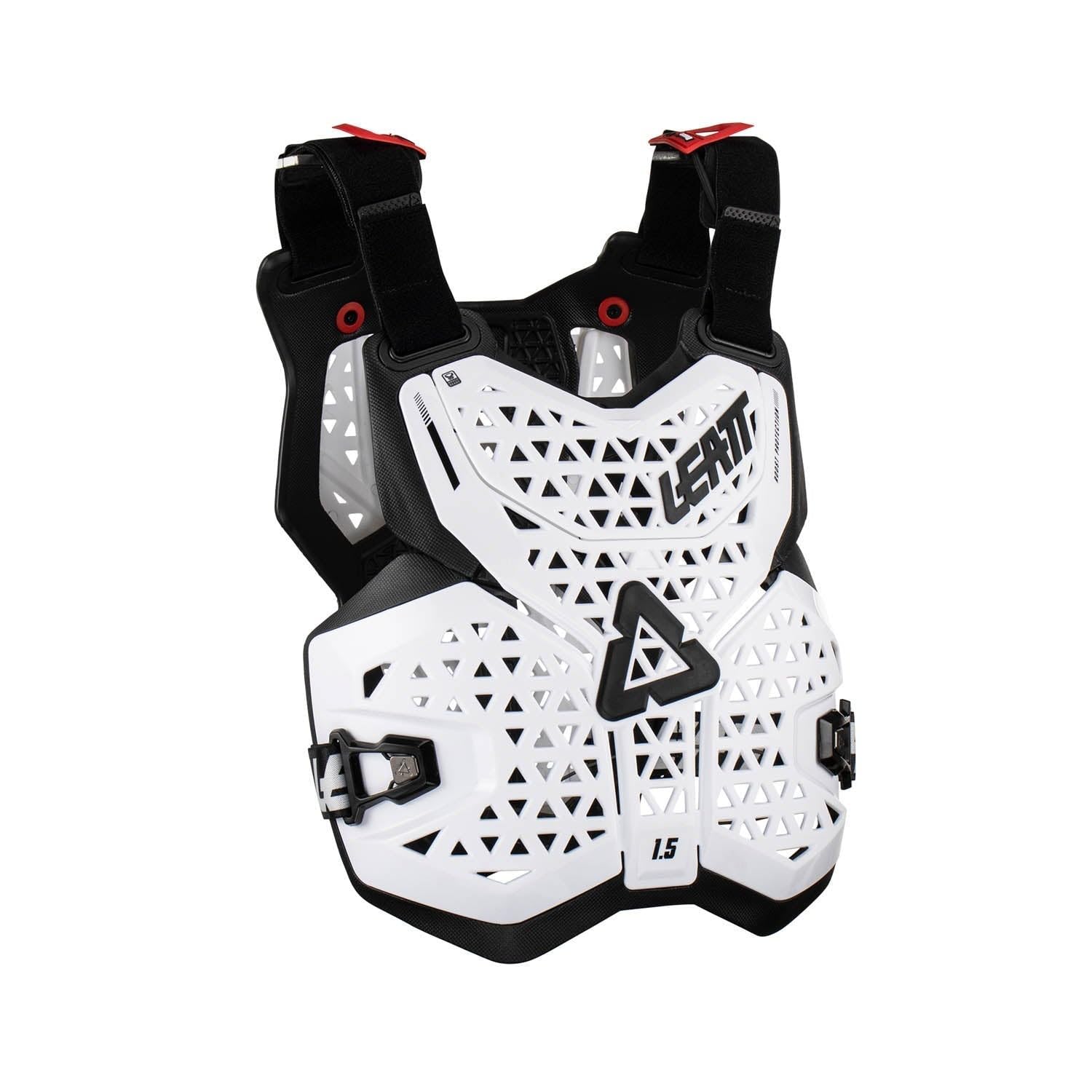
I picked up the Leatt 1.5 MX Offroad Chest Protector White because it is the entry point of the range, a lightweight hard shell roost guard with a padded base layer. It is certified to the EN14021 roost standard rather than full impact levels, and that honesty matters: this one is built to stop flying rocks and debris, not to absorb a big crash. At roughly 700 grams it feels like almost nothing on your chest, and the 3D design kept it sitting flat over my jersey all day. —Tyler Bennett
I've been using the Leatt 1.5 MX Offroad Chest Protector White, and honestly it is perfect for practice days and lighter trail riding. The ventilation slots keep air moving, the front and rear plates remove for washing, and the BraceOn system still lets you run a Leatt neck brace, which is generous at this level. The white finish looks sharp when new but shows mud and chain lube quickly, so expect to scrub it. If your riding is roost heavy rather than crash heavy, it does its one job well. —Olivia Grant
I tried the Leatt 1.5 MX Offroad Chest Protector White because I wanted a simple guard for coaching days when I am on and off the bike constantly. The buckle closure is fast, the adjustable straps dial in quickly over different jerseys, and it never restricted my breathing on hot laps. Just be clear about its limits: there is no CE impact rating for the chest plate here, so I would not choose it for racing or hard enduro. As an affordable, comfortable roost shield from a serious brand, it makes sense. —Nathan Pierce
Get It From Amazon Now: Check Price on Amazon & FREE Returns
Why Leatt Chest Protector Reviews Is Necessary
A chest protector is the piece of gear that stands between your ribs, sternum, and spine and whatever the track throws at them, from roost at speed to a handlebar in a fall. I looked at Leatt specifically because the brand builds its whole reputation on protection, publishes CE test levels for every model, and designs each protector to integrate with its neck braces. Reading marketing claims was not enough, so I rode in each one and judged the protection I could verify against the standards printed on the label.
The range is wider than most riders realize. At one end sit simple roost guards that stop stones, in the middle are soft foam protectors that absorb real impacts while staying comfortable, and at the top are hard shell systems with Level 2 chest and back certification. Which one is necessary depends entirely on how and where you ride. A practice day on a prepped track and a rocky enduro loop punish your body in completely different ways, and wearing the wrong level of protection in either direction, too little or too much, gets old fast.
Testing them back to back also showed me how much fit decides protection. A protector that shifts in a crash cannot do its job, no matter how strong its foam is. Straps, sizing, brace compatibility, and whether you wear it over or under a jersey all change how a model performs in the real world. That is why this review spends as much time on fit and ventilation as on certification numbers. The best protector is the one rated for your riding that you will actually wear on every single ride.
My Buying Guides on Leatt Chest Protector Reviews
Why I Looked for Leatt Chest Protector Reviews
I wanted a protector from a brand that publishes real CE test results, and Leatt lists the exact standard and level for every model it sells.
Rider reviews kept mentioning fit problems with cheaper guards, so I focused on how each Leatt actually sat on the body over full riding days, not just in the parking lot.
What I Check Before Buying
First, the certification: EN14021 means roost protection only, while EN1621 ratings mean tested impact absorption for chest and back. I match the rating to the riding I actually do.
Second, I check neck brace compatibility, strap adjustment range, and whether the protector works over and under a jersey, because those details decide whether it gets worn or left in the gear bag.
My Preference for Hard Shell or Soft Foam Protection
For motocross racing and rocky tracks I prefer a hard shell over impact foam, because the shell spreads roost and sharp hits before the foam even starts working.
For trail and enduro days I switch to soft foam models like the AirFit Evo. They are cooler, lighter, and move with you, and that comfort means I never skip wearing protection.
What I Look for in Quality
Quality shows in the stitching on straps, buckles that still click after mud and washing, and foam that returns to shape after an impact instead of packing down flat.
I also look for removable plates for cleaning and a published protection score or test level. Brands that hide their test data usually have a reason, and Leatt prints its numbers openly.
How I Compare Prices
I compare what each price level actually buys: roost only certification at the bottom, Level 1 impact foam in the middle, and Level 2 hard shell systems at the top.
A protector that covers chest, back, shoulders, and elbows in one piece can cost less overall than buying those guards separately, so I price the full setup, not just the single item.
My Tips for Choosing the Right One
Measure your chest and weight and follow the maker sizing chart exactly. Protectors that feel slightly snug in the shop usually fit perfectly once the foam warms up on the bike.
Decide honestly how you ride. Buy the certification your worst regular ride demands, then pick the most comfortable model at that level, because the protector you enjoy wearing is the one that protects you.
Final Thoughts
After weeks of rotating these five, my own gear bag now holds two: the 3DF AirFit Evo for trail days, because its comfort means I never leave it behind, and the 5.5 Pro HD for race days, when Level 2 hard shell coverage is worth every gram. The AirFit Lite Evo is the best single piece answer if you also want shoulder and elbow coverage, the Airflex Stealth is the mountain biker pick, and the 1.5 is an honest roost guard as long as you respect its limits.
Whichever Leatt you choose, you are buying from a brand that tests and publishes its protection levels, and that transparency is rare in this category. Match the certification to your riding, get the sizing right, and check brace compatibility before you order. Do those three things and any of the protectors above will serve you well. Ride protected, ride longer, and I will see you at the track.
Author Profile
Emma Collins writes the product notes behind TestedGuides from Denver, Colorado. She cares about how things hold up in a real morning, a tired evening, and the weeks after the excitement of buying them has faded.
I Tested Edge Shave Gel Travel Size: My Honest Results, Benefits, and What You Need to Know
2026-11-04 · Personal Recommendations
I Tested Weighted Wrist Bracelet For Tremors: My Honest Results, Benefits, and What You Need to Know
2026-11-04 · Personal Recommendations
I Tested Hooks 10 Fishing Long: My Honest Results, Benefits, and What You Need to Know
2026-11-04 · Personal Recommendations